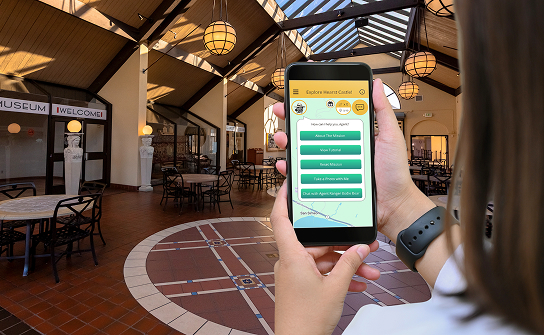
The Enchanted Hill, as Hearst called his beloved hilltop retreat, soon came to be understood as a museum: he filled the buildings and grounds with thousands of works of art purchased specifically to furnish the estate. These historic objects from around the world can be enjoyed today in the gardens, guest houses, and main building called Casa Grande. Samples from the collection are highlighted below.
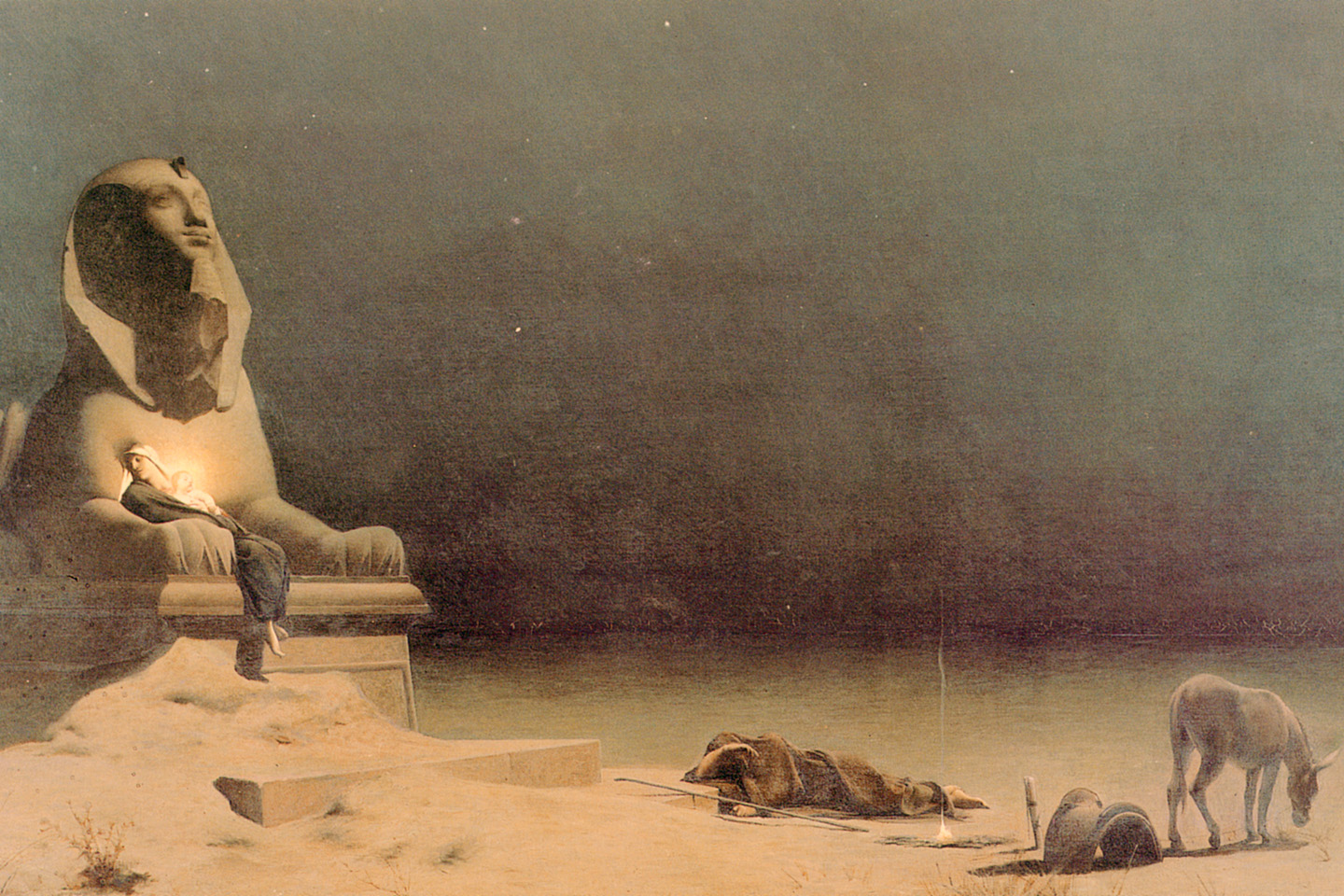
Rest on the flight into Egypt
Purchased by William Randolph Hearst in 1894 at auction, this painting dated 1879 by Luc-Olivier Merson (French, 1846-1920) is one of four versions of the same composition depicting the Holy Family’s rest while fleeing persecution by Roman imperial forces. This piece can be seen on the Upstairs Suites tour.
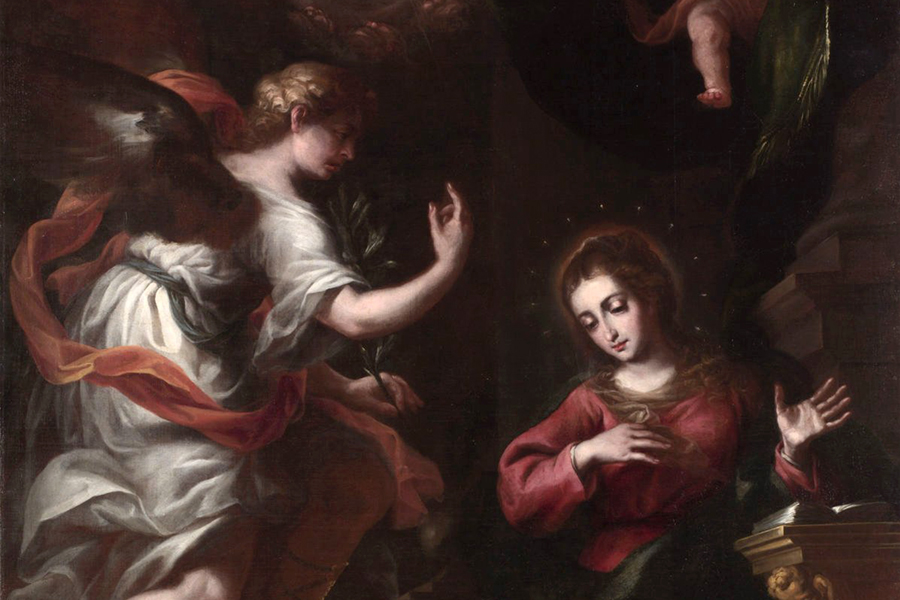
Annunciation
This painting of the Annunciation, one of the most prominent works of art (approx. 8 feet high x 5 feet wide) in the Assembly Room at Hearst Castle, is a masterpiece by the Spanish painter Bartolomé Pérez de la Dehesa (c. 1634 – 1698). The Annunciation and its pendant in the Assembly Room, the Crucifixion with John the Evangelist, Virgin Mary and Mary Magdalene, which was likely painted by another artist, were purchased by William Randolph Hearst in 1927 from Cannell and Chaffin, a decorating firm in Los Angeles.
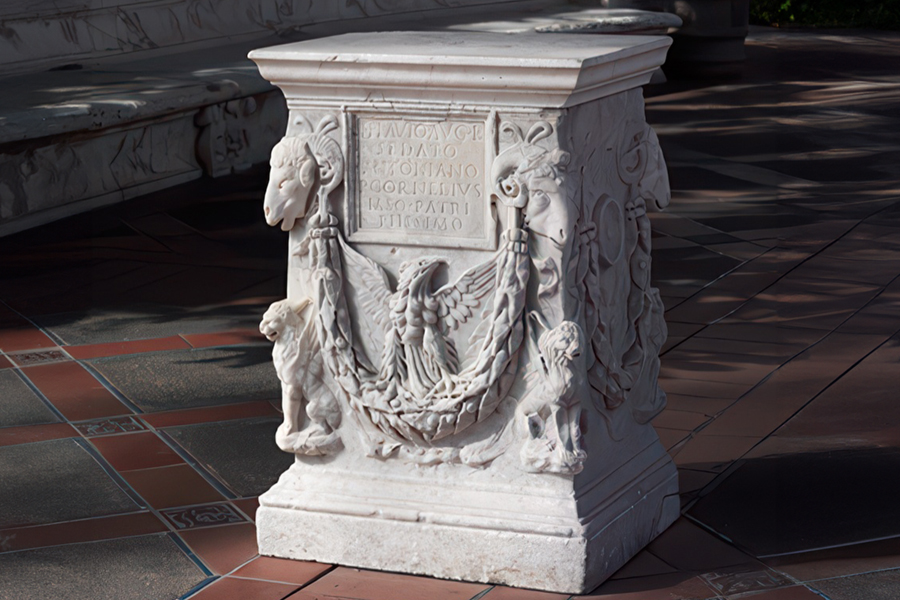
Cippus
Purchased by Hearst in a 1930 auction, this funerary monument is made of marble and dated to 79-81 AD with late 18th-century lid and repairs. This cippus is carved with the name of a father who set it up in his son’s memory. The cippus is displayed on the south side of the Main Terrace of the property.
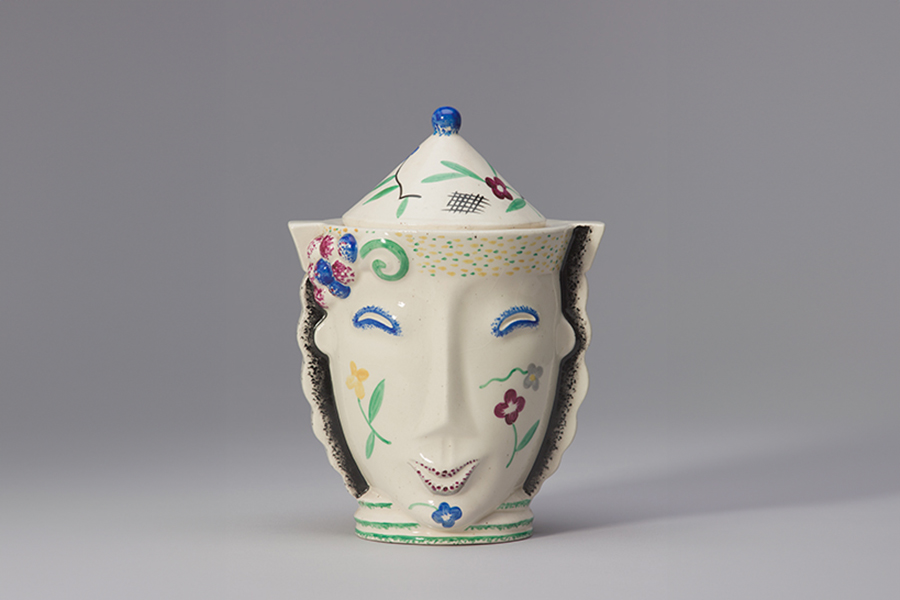
Covered Jar In The Form Of A Face
Amongst the largely Renaissance ambiance of Hearst Castle, this lighthearted accent of Art Deco offers engaging contrast. The covered jar in the form of a face can be traced back to the origins of the Art Deco style of the early 1900s in Paris. The jar is displayed in Casa del Monte, one of the guest cottages on the hilltop and can be seen on the Cottages and Kitchen tour.
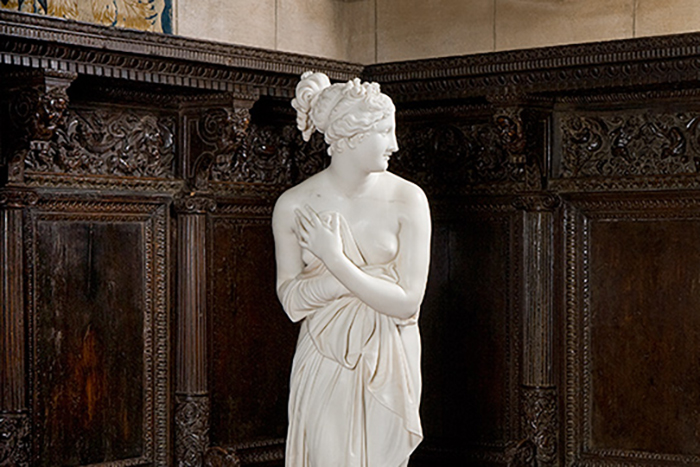
Venus Italica
The Venus Italica was created by Antonio Canova (1757-1822) to replace an ancient Greek statue in Florence, Italy, which was seized for France in 1802 during Napoleon Bonaparte’s invasion. Canova, unwilling to do nothing more than carve a copy, instead invented a new figure, called the “Italian” Venus to distinguish it from the Greek sculpture. Hearst acquired the statue in a 1930 auction from a renowned English collector. It remains on display in the Assembly room.
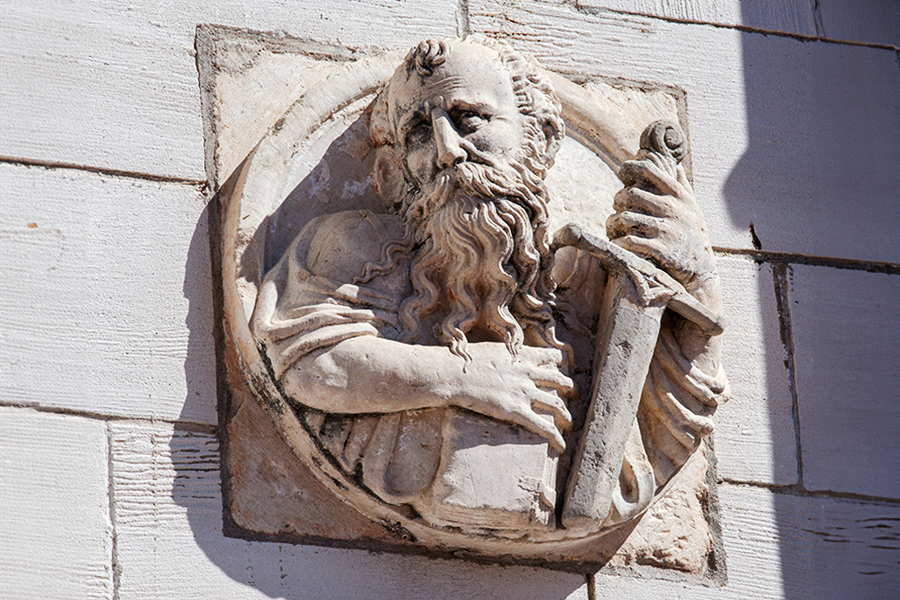
Relief of Saint Paul
The relief of Saint Paul, identified by the instrument of his martyrdom, a sword, and its companion, a relief of Saint Peter, who holds the symbolic key to Heaven are crafted of limestone in a style dated to around 1525. Hearst purchased the reliefs at an auction in May of 1923 and they have since been mounted on the façade of Casa Grande.
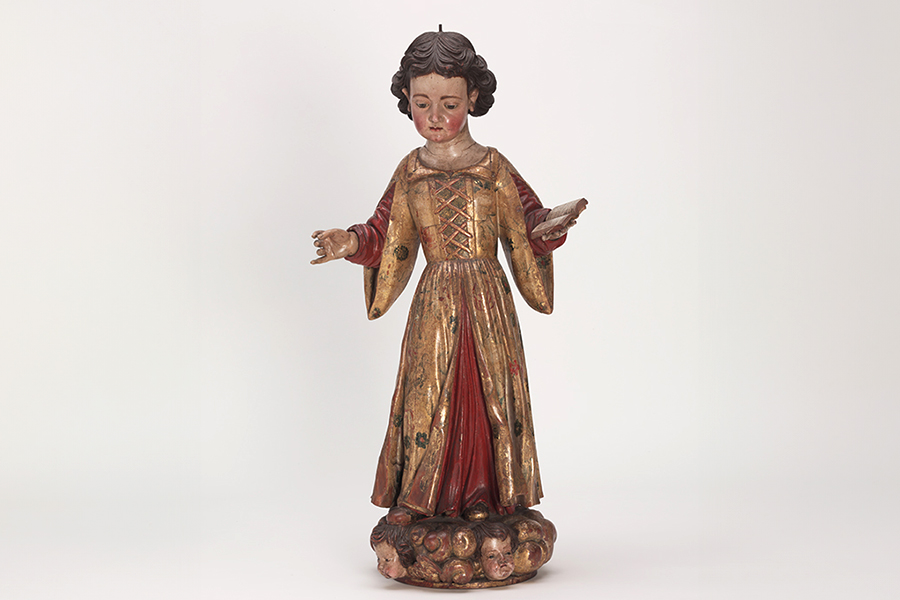
Virgin as Young Girl
This charming Spanish sculpture representing the Virgin as a young girl dates to about 1630-80. The sculpture is polychromed in estofado, a technique in which most of the sculpture (excluding the flesh) is covered with gold leaf which is then coated with matte tempera paint. Designs incised into the paint reveal the shining gold underneath in patterns that were intended to resemble those of rich brocade fabrics.
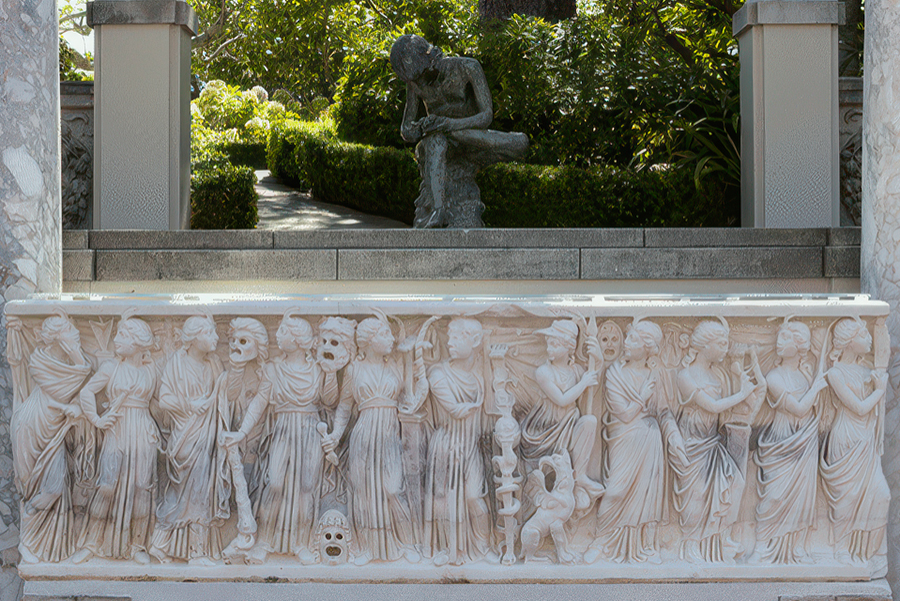
Sarcophagus With Nine Muses, Apollo, and Minerva
This marble Roman sarcophagus dating to about 230 A.D., depicts the deceased in the center as the god Apollo with his lyre flanked by the nine muses to either side. This sarcophagus is one of three ancient Roman works of art at Hearst Castle and is displayed along the esplanade surrounding the main terrace.
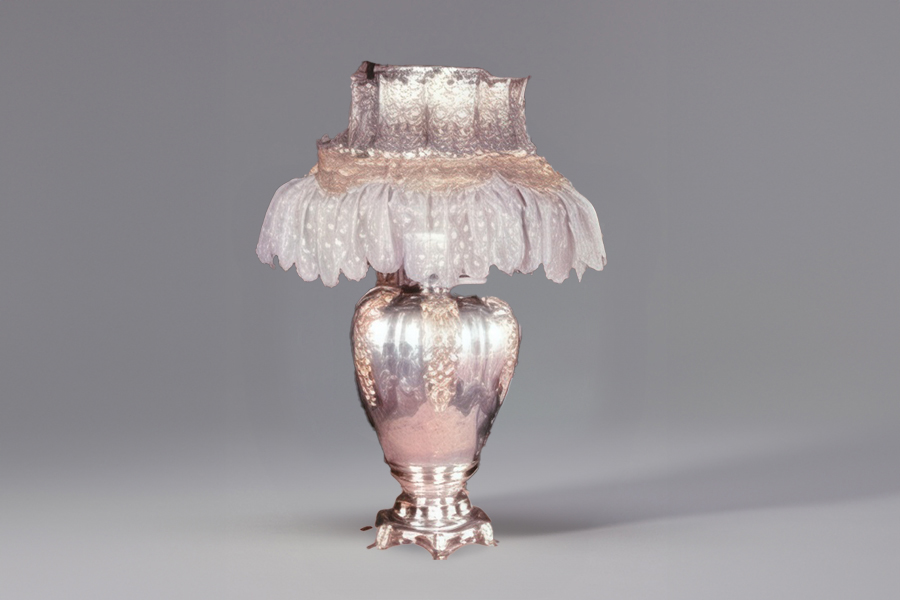
Orchid Vase
This lamp incorporates the “Orchid Vase,” created in 1889 by Tiffany & Co. in silver and enamel. After winning top honors at the Paris Universal Exposition that year, it was purchased by Phoebe Apperson Hearst. She then commissioned Tiffany to provide the shade and convert the vase into a lamp (1891). William Randolph Hearst inherited the lamp after his mother’s death ad installed it in the Assembly Room where it is displayed today.
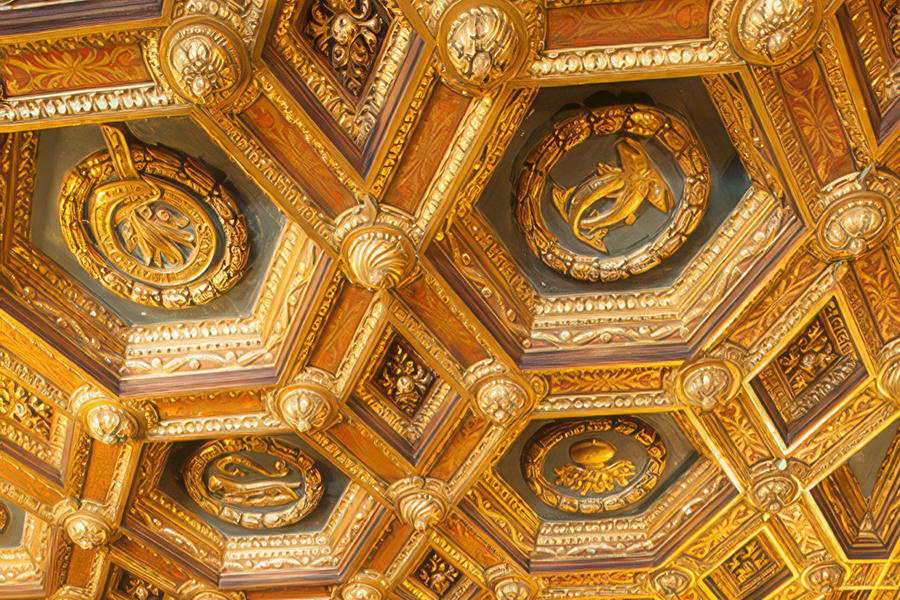
Ceiling in Casa Del Monte
While most of the ceilings in Casa Grande date to the late 14th through early 18th centuries and come from Italy and Spain, the ceilings in the guest houses were designed by Julia Morgan and custom-made by craftsmen during William Randolph Hearst’s era. The ceilings of the guest cottages were made of cast plaster and glisten with 22 karat gold leaf.